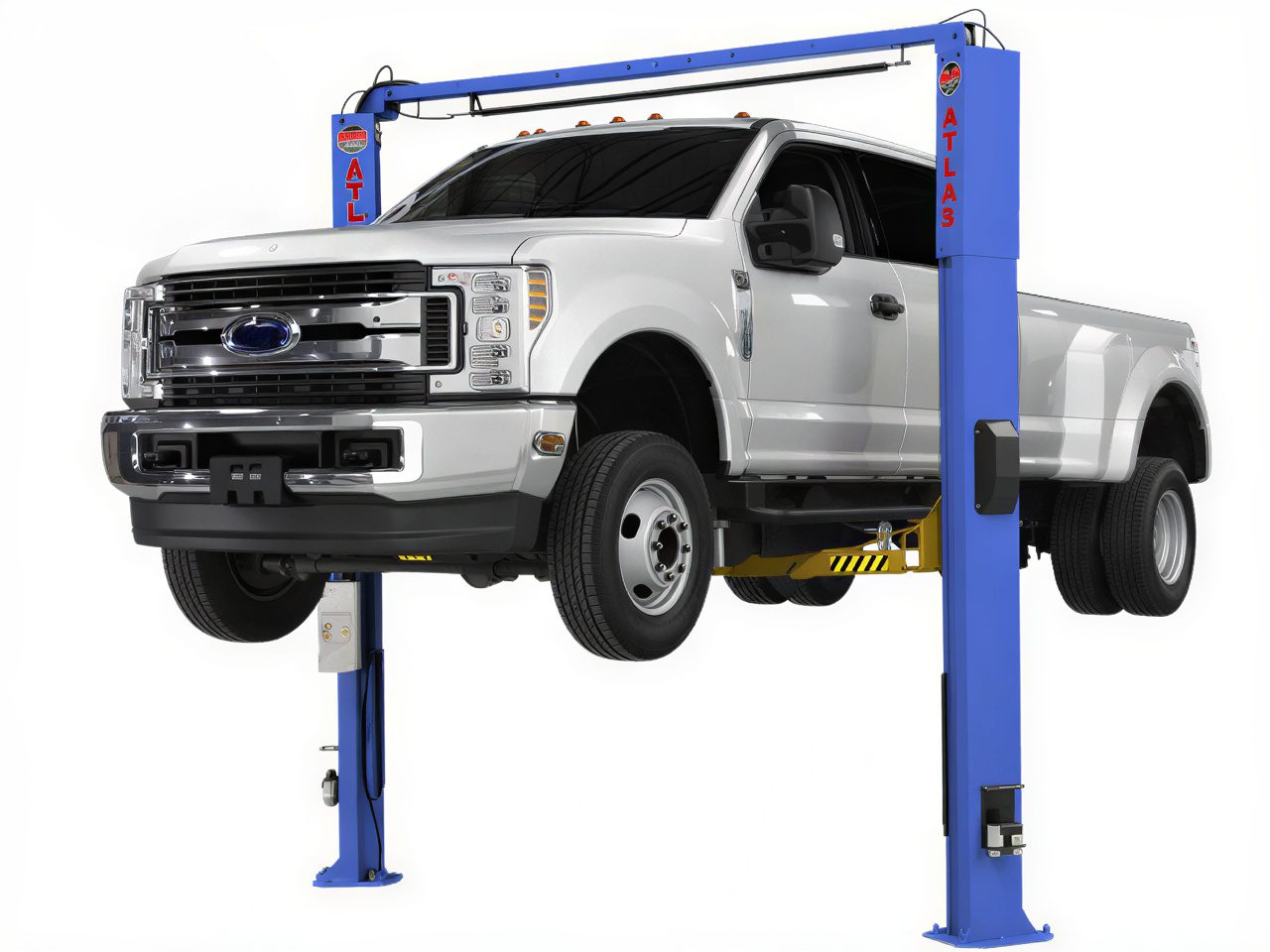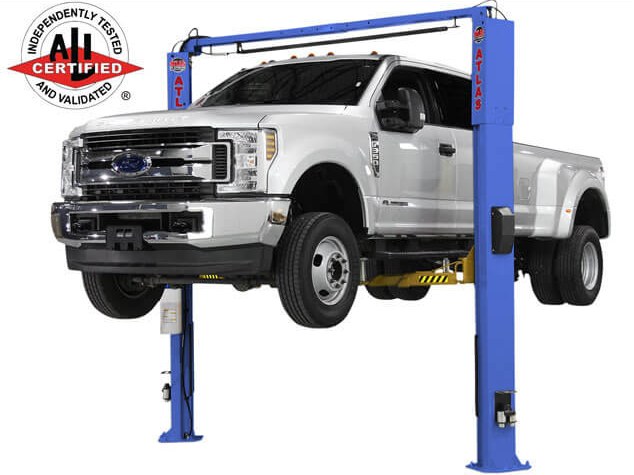
Choosing between a two-post and a four-post lift is one of the first big decisions any shop owner makes — and it's one worth getting right. The wrong lift can cost you bay space, slow down your techs, or leave you short on capacity the day a one-ton dually rolls in. Here's a straightforward breakdown to help you decide.
How a Two-Post Lift Works
A two-post lift raises a vehicle by its frame or pinch welds using two opposing arms, lifting the whole vehicle clear of the ground with the wheels hanging free. That open access underneath is exactly why two-post lifts are the workhorse of most general repair shops.
Best for: brake jobs, suspension and steering work, exhaust, transmission service, and any job where you need the wheels off or full underbody access.
How a Four-Post Lift Works
A four-post lift drives the vehicle up onto two runways supported by four columns. The vehicle sits on its own wheels, which makes it incredibly stable and fast to load — drive on, lift, done. It's the go-to for alignments, quick service, and long-term storage.
Best for: wheel alignments, quick lube and inspection work, heavier vehicles, storage, and shops that prioritize fast drive-on/drive-off cycles.
Two-Post vs Four-Post: The Key Differences
- Underbody access: Two-post wins — wheels hang free. Four-post keeps the wheels on the runways.
- Stability & ease of use: Four-post is more stable and easier to load, with no setup of arms or pads.
- Footprint: Two-post takes less floor space; four-post needs room for the runways.
- Capacity: Four-post lifts generally offer higher weight ratings for trucks and fleet vehicles.
- Cost: Comparable entry-level pricing, but four-post lifts with rolling jacks and alignment kits add up.
When to Choose a Two-Post Lift
If your bread and butter is general mechanical repair — brakes, suspension, exhaust, drivetrain — a two-post lift gives your techs the access they need and keeps your floor plan tight. For most independent shops on Vancouver Island, a two-post is the first lift to buy.
When to Choose a Four-Post Lift
Doing alignments, servicing heavier trucks, running a high-volume quick-service bay, or need overnight vehicle storage? A four-post lift's stability, capacity, and drive-on speed make it the better fit — and it pairs perfectly with rolling jacks when you do need the wheels off.
Don't Forget Space and Installation
Ceiling height, floor thickness, and electrical supply all matter. Two-post lifts need adequate overhead clearance and a properly rated concrete slab for the anchors; four-post lifts need the floor length for the runways. We assess your space before you buy and handle professional installation, so there are no surprises on install day.
The Atlas Lifts We Carry
SVI Automotive Equipment is an authorized Atlas dealer, with two-post, four-post, and portable lifts (including ALI-certified models) in stock in Victoria. From the Atlas Platinum PVL series through to the Atlas Garage Pro 8000, we'll match the capacity and configuration to your shop. Browse the full lineup on our Vehicle Lifts page, and remember — every lift can be paired with $0-down financing through Lease Link Canada.