A car lift used to be something you only saw in a commercial shop. Not anymore. More and more homeowners, weekend wrenchers, and collectors are putting a lift right in the home garage — and once you've used one, it's hard to go back to a jack and a couple of stands. If you've ever thought about it but assumed it was too expensive or too big a job, this guide is for you.
Why Put a Lift in Your Home Garage?
The biggest surprise for most people isn't how much easier the work gets — it's how much room they get back. A lift lets you park a vehicle up in the air and keep the floor underneath it completely open. Suddenly a one-car bay does the job of two.
- Reclaim your floor space. Store a car overhead and still use the space below for parking, a workbench, or your project. Your garage gets tidier, not tighter.
- Work in comfort. No more crawling around on a creeper or wrestling a floor jack. Raise the car to a comfortable height and walk right up to the job.
- Take on bigger projects. Brakes, suspension, exhaust, oil changes, a full restoration — everything is faster and safer when you have real access underneath.
- Protect the good stuff. Got a seasonal ride or a project car? Lift it up out of the way and keep your daily driver parked below it, out of the weather.
It Costs Less Than Most People Think
Ask around and you'll hear guesses that are way off. A quality home lift is far more attainable than people assume — and you don't have to pay for it all at once. Through $0-down lease-to-own financing with Lease Link Canada, you can spread the cost over manageable monthly payments and start using the lift right away. For a lot of DIYers, the payment lands in the same range as a nice set of tools.
You Might Not Need to Rewire Your Panel
One of the assumptions that stops people is electrical — the fear that a lift means a big-ticket call to an electrician and a panel upgrade. It doesn't have to. A number of models — even commercial-grade ones — run on 120V single-phase power, the same kind of circuit you already have at home, instead of a 220V line. That can turn a big electrical project into a minor one. The Atlas Garage Pro 8000 four-post lift runs on standard 110V power (on a 30A breaker), and so does the commercial-grade Atlas Kwik Bay. We'll look at your garage's setup and tell you honestly what you'll need before you buy.
Match the Lift to Your Garage
There's no single "home lift" — there are a few styles, and the right one comes down to your ceiling height and how you want to use the space. Here are the three most popular for home garages.
1. Low-Profile Mid-Rise Lifts
These sit low to the ground, don't rise very high, and are easy to move — perfect for a garage with a low ceiling, and for reclaiming your back without giving up your parking. The Atlas Versa Extended Mid-Rise starts just 4⅛" off the floor and rolls aside when you're done. For something tougher, the commercial-grade Atlas Kwik Bay is a 7,000 lb portable mid-rise with an open-center design that opens up much of the underbody — and because it runs on 120V, it doesn’t need 220V service, just its own 30A circuit. Both are ideal for wheel, tire and brake work in a tight space.
2. Low-Ceiling Two-Post Lifts
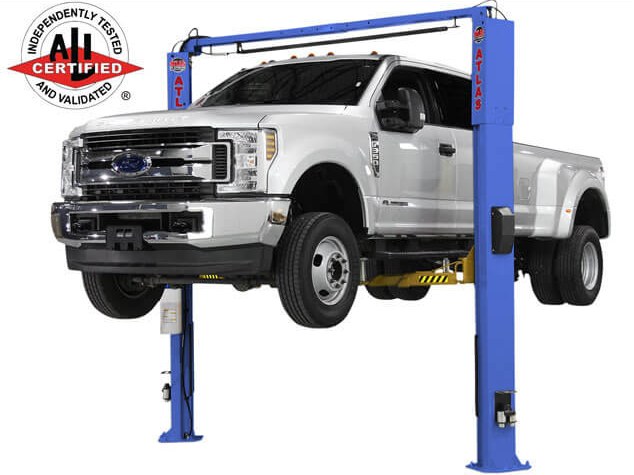
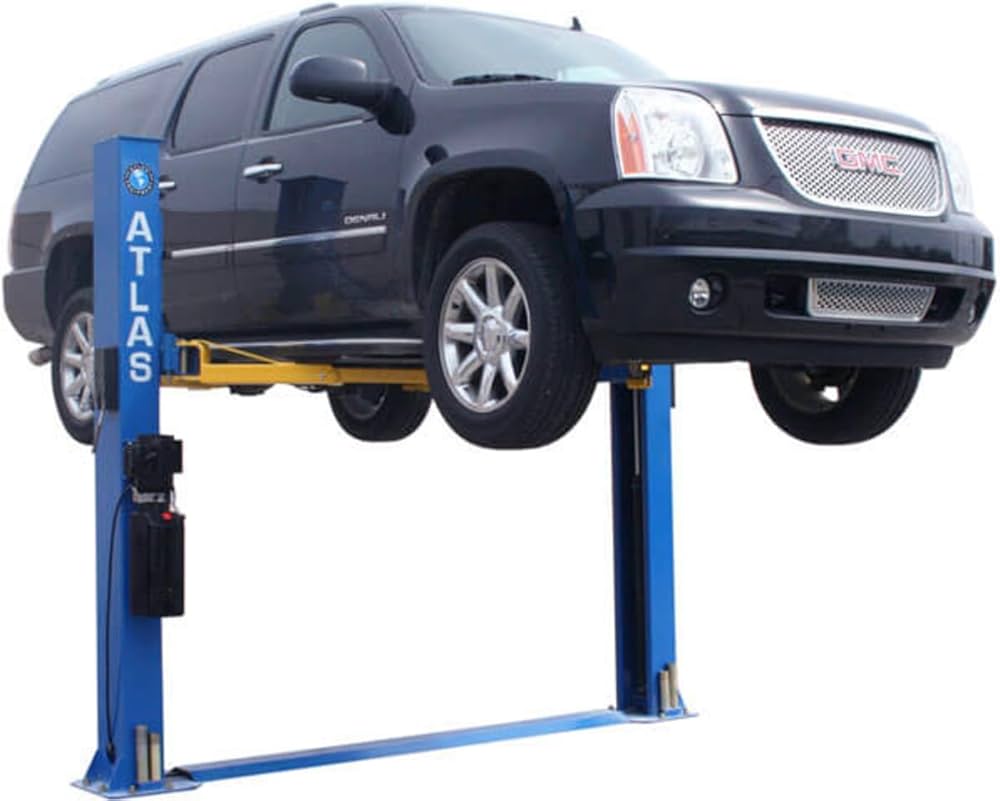
Worried your ceiling is too low for a full two-post? Baseplate designs are built exactly for that. The Atlas BP8000 fits garages with ceilings as low as about 9′3″, and the Platinum PVL-9BP uses an open-top baseplate design for tight overhead clearance — both give you full wheels-free access to the underbody in a compact footprint.
3. Four-Post Drive-On Lifts
The easiest to use and the best for storage. You simply drive on, raise the vehicle up out of the way, and walk freely underneath — with room to park a second car below. The Atlas Garage Pro 8000 is built for home garages: rock-solid, drive-on simple, doubles as secure overhead storage, and runs on 120V power. It even ships with wheel chocks and drip trays included. Watching the budget? The aftermarket Performance Hoist PH8S has become our hottest-selling four-post — see a recent install near Miracle Beach with two classic Chevys stacked in one bay.
A Real-World Example
Trevor builds and maintains performance race and track cars, and he recently had an Atlas Kwik Bay installed in his own home garage. It fit his situation perfectly. His ceiling sits on the low side, so a full-height lift was off the table — but the low-profile Atlas Kwik Bay lets him drive over it and raise the car to a comfortable working height. And because it's a commercial-grade lift that still runs on 120V, all he needed was a minor electrical upgrade to power it at home. For the kind of precise, hands-on work he does, it's been a game-changer — a great example of how the right lift makes a home garage far more capable. (We're putting together a short video with Trevor on his setup — check back soon.)
What to Check Before You Buy
A little planning up front saves headaches on install day. Four things to look at:
- Ceiling height. Measure to the lowest point — a garage door track or opener can be the real limit. This decides whether you go mid-rise, low-ceiling two-post, or full-height.
- Floor and concrete. Anchored lifts need a properly rated concrete slab of adequate thickness. If you're not sure what's under your garage, we can help you find out.
- Electrical. Confirm whether a 120V or 220V circuit makes sense for the model you want — often it's simpler than expected.
- Door and vehicle clearance. Make sure a raised vehicle clears the door when it's up, and that you've got room to move around it.
None of this has to be guesswork. We assess your garage before you commit and handle professional installation, so the lift that shows up is the one that actually fits your space.
Do Your Homework — Then Give Us a Shout
Read up, measure your garage, and picture how you'd use the space. When you're ready, SVI Automotive Equipment is your local authorized Atlas dealer right here on Vancouver Island — with ALI-certified lifts in stock, honest advice, and installation included. Browse the full lineup on our Vehicle Lifts page, and remember every lift can be paired with $0-down financing through Lease Link Canada.